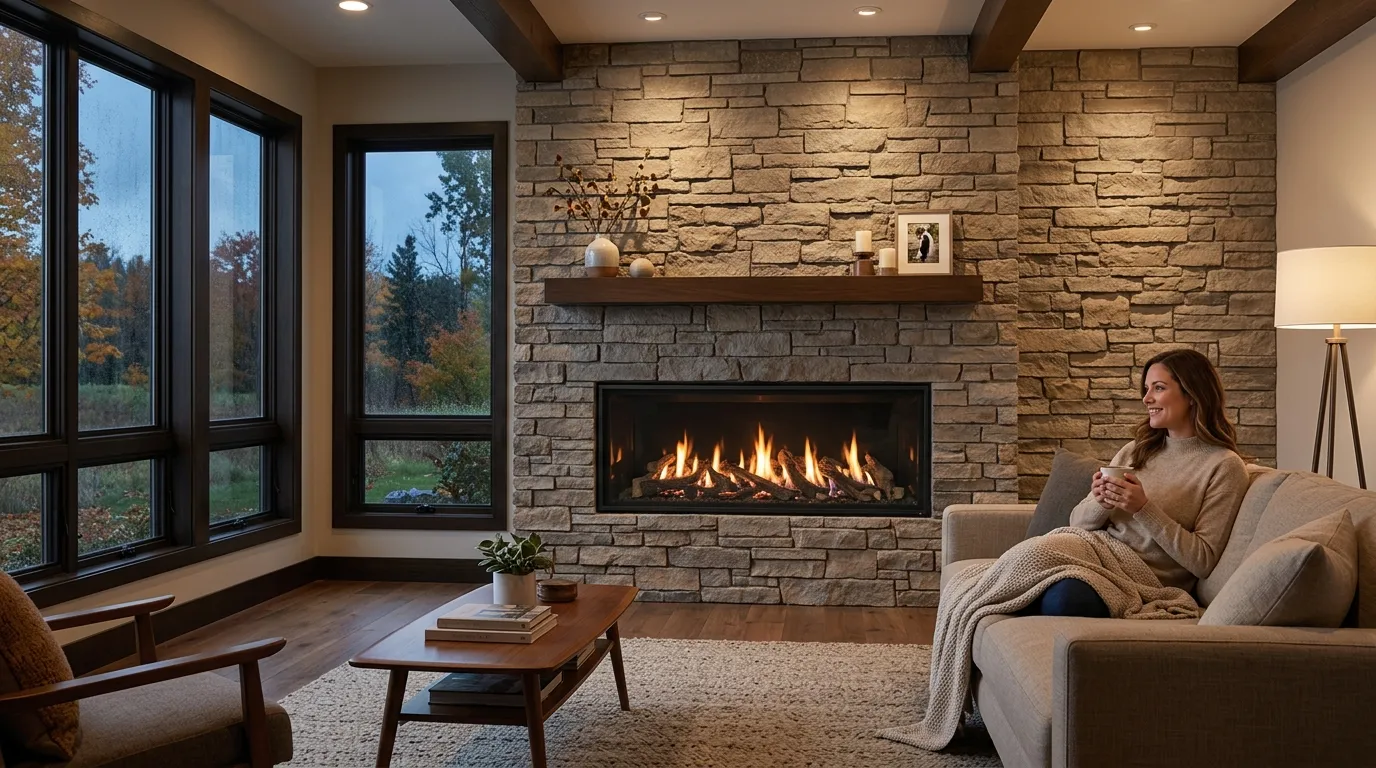
A gas fireplace gives U.S. homeowners warmth and visible flames without hauling wood or cleaning ash. Modern systems include direct-vent, vented, vent-free, insert, and built-in designs for different homes. Your best choice depends on ventilation, installation conditions, local codes, heating goals, and budget.
Key Facts at a Glance
| Factor | What U.S. Homeowners Should Know |
|---|---|
| Typical installed cost | About $2,300–$10,000 for many projects |
| Common fuel | Natural gas or propane |
| Main types | Direct-vent, vented, vent-free, inserts, built-in units |
| Best all-around option | Direct-vent suits many homeowners seeking heat and controlled venting |
| Existing masonry hearth | An insert may reduce construction needs |
| Vent-free systems | Lower installation complexity but greater indoor-air concerns |
| Professional installation | Recommended for gas connections, venting, permits, and code compliance |
| Safety essentials | Working smoke alarms, carbon monoxide alarms, proper clearances, and regular inspections |
Direct answer: A gas fireplace can provide convenient supplemental heat, easy controls, and realistic flames. Direct-vent models suit many U.S. homes because combustion gases exit outdoors. Installed projects commonly cost several thousand dollars, while venting, gas-line work, permits, finishes, and structural changes can raise the final price.
How These Heating Systems Work
These appliances burn natural gas or propane inside a firebox to create heat and visible flames. Depending on the design, combustion air comes from indoors or outdoors. Exhaust may leave through a dedicated vent, an existing chimney, or remain indoors with a vent-free unit.
Controls vary considerably between models and price levels. Many current products offer electronic ignition, thermostats, remote controls, blowers, and adjustable flame settings. Decorative logs, glass media, stone, or other finishes can change the appearance without altering the basic fuel source.
Gas-burning hearth products generally create much less mess than traditional wood fires. They remove the need to split, carry, season, and store firewood. They also avoid the routine ash cleanup associated with wood-burning systems.
Gas Fireplace Types to Consider

Choosing the right design starts with understanding how each system handles combustion and exhaust. The installation location matters almost as much as appearance. Existing chimneys, exterior walls, gas lines, and room dimensions can narrow your practical choices.
Direct-Vent Models
Direct-vent systems use sealed combustion and send exhaust outdoors. They also draw combustion air from outside rather than using conditioned indoor air. Venting can often run horizontally through an exterior wall or vertically through a roof.
This setup makes direct-vent models attractive for many new installations. They combine visible flames, useful heat, and separation between room air and combustion gases. Installation costs can rise when walls, roofing, or gas piping require significant changes.
Traditional Vented Models
Some vented systems use an existing chimney or another approved vertical vent. These products can produce a traditional flame appearance that appeals to homeowners focused on ambiance. Part of the generated heat can leave through the venting system.
An existing chimney should be inspected before connecting a new appliance. Cracks, damaged liners, blockages, and other defects can affect safe operation. Homoya’s chimney repair guide explains common chimney problems and repair considerations.
Vent-Free Models
Vent-free units do not send combustion exhaust through a chimney or exterior vent. That can simplify installation and keep more generated heat inside the room. These systems also introduce combustion products and moisture directly into indoor living space.
The U.S. Environmental Protection Agency does not support unvented gas stoves because of indoor-air-quality concerns. EPA also notes that some jurisdictions prohibit their installation. Buyers should check local building rules before choosing this configuration.
Inserts for Existing Fireplaces
An insert fits into an existing masonry or factory-built opening when the installation conditions permit it. This approach can preserve an established hearth while replacing wood burning with gas. Venting and gas-line requirements still need professional evaluation.
Current national estimates put many insert installations between roughly $2,300 and $8,000. Chimney repairs, new liners, permits, and long gas runs can increase that amount. Existing conditions usually influence the final price more than homeowners expect.
Vented vs. Vent-Free: Quick Comparison
| Feature | Direct/Vented | Vent-Free |
|---|---|---|
| Exhaust | Sent outdoors | Released indoors |
| Installation | Usually more involved | Often simpler |
| Indoor-air concerns | Lower when correctly installed | Greater consideration |
| Vent or chimney | Required | Not required |
| Heat retained indoors | Moderate to high | High |
| Local restrictions | Standard code requirements | Restricted in some locations |
| Best suited for | Homeowners prioritizing controlled venting | Limited situations where local rules permit |
For many households, direct vent is the more balanced starting point. It avoids releasing normal combustion products directly into occupied rooms. Still, the correct system depends on the building, local regulations, and manufacturer requirements.
How Much Does Installation Cost in 2026?
National cost guides show a broad range because every installation presents different conditions. HomeGuide reports an average total range of about $2,300 to $10,000. A recent specialty-industry estimate places professional projects around $2,500 to $10,000.
Several expenses can move your project toward either end of that range. A straightforward replacement may require less construction than a new installation. Adding gas piping, electrical service, exterior venting, masonry, framing, or custom finishes can increase costs.
Common budget items include:
- Fireplace unit and controls
- Gas-line installation or modification
- Venting materials
- Electrical work
- Permit and inspection fees
- Framing or masonry work
- Mantel and surround materials
- Chimney repairs or liners
- Professional labor
- Wall, flooring, or finish repairs
A larger remodel may involve more than the heating appliance itself. Wall changes, room layouts, electrical work, and finishes can become part of a broader renovation. Homoya’s home additions planning guide provides useful context for budgeting larger residential improvements.
How to Choose the Right Size
A larger unit is not automatically a better purchase. Heating needs depend on room size, insulation, climate, ceiling height, windows, and the home’s existing HVAC system. Manufacturers provide output ratings that help installers match equipment to the intended space.
Consider whether you want occasional ambiance or meaningful supplemental heat. A family room in Minnesota has different heating requirements from a living room in southern California. Oversizing can make a room uncomfortable and encourage short operating cycles.
Avoid selecting equipment from square footage alone when conditions are unusual. Large windows, tall ceilings, poor insulation, or open layouts can change heat demand substantially. A qualified installer can evaluate these conditions before recommending capacity.
Safety Requirements U.S. Homeowners Should Know
Any fuel-burning appliance needs correct installation and maintenance. Poor connections, damaged venting, blocked flues, or incorrect combustion can create serious hazards. Gas work should follow manufacturer instructions and applicable local codes.
The U.S. Consumer Product Safety Commission recommends smoke alarms on every home level and inside each bedroom. It also recommends carbon monoxide alarms on every level and outside sleeping areas. CPSC advises monthly alarm testing and battery backup for power outages.
EPA guidance also stresses proper appliance adjustment and sound venting. Damaged or blocked chimneys can allow combustion gases to enter living areas. The agency recommends trained professional inspection and prompt repair of leaks or damaged components.
Keep furniture, curtains, toys, and other combustible materials outside manufacturer clearance zones. Glass fronts can become hot enough to cause burns. Households with children or pets should consider suitable barriers and supervision.
Installation: Why Professional Work Matters
Connecting a fuel-burning appliance involves more than positioning a firebox against a wall. Installers may need to modify gas piping, venting, framing, electrical connections, and exterior penetrations. Each part must work with the specific appliance listing and local requirements.
Permit rules vary by state and municipality. Some projects require separate approvals for gas piping, mechanical work, or structural modifications. A licensed contractor familiar with local requirements can identify which permits apply before construction begins.
Professional installation also gives homeowners a clear opportunity to document the completed system. Keep the manual, model number, warranty information, inspection records, and contractor details together. Those records can simplify future service and replacement decisions.
Efficiency and Home Comfort
Efficiency varies by product type and design, so buyers should compare manufacturer specifications rather than broad marketing claims. Direct-vent systems can deliver useful room heat while exhausting combustion products outdoors. Decorative gas logs may focus more on appearance than substantial space heating.
Your home’s building envelope also affects comfort. Drafts around doors and windows can waste heat regardless of the appliance you install. Homoya’s weather-stripping guide covers practical ways to reduce air leakage around doors.
Treat a decorative hearth as one part of the home’s overall heating plan. Central HVAC equipment still carries most heating demand in many houses. Comparing comfort goals before buying can prevent paying for capacity you do not need.
Maintenance and Expected Care
Maintenance requirements depend on the system, fuel, venting, and manufacturer. A routine service visit may include checking burners, ignition components, seals, glass, controls, and venting. Problems should be addressed before heavy seasonal use begins.
Watch for unusual odors, soot, ignition trouble, damaged glass, or changes in flame behavior. These symptoms can indicate a service issue that deserves professional attention. Never bypass safety controls or modify burner components yourself.
Chimney-connected systems require extra attention to the flue and masonry condition. EPA recommends annual inspection for gas stoves and inserts by a certified technician. Regular service can catch venting or combustion problems before they become larger repairs.
Buying Checklist Before You Order
Before choosing a model, collect basic information about your room and existing utilities. Doing this early makes dealer estimates easier to compare. It also reduces the risk of purchasing equipment that cannot be installed as expected.
Check these items:
- Room dimensions and ceiling height
- Existing chimney or vent condition
- Access to natural gas or propane
- Exterior wall and roof options
- Desired heating output
- Local permit requirements
- Manufacturer clearances
- Electrical requirements
- Surround and mantel dimensions
- Installer licensing and warranty terms
- Total installed price, not unit price alone
Request written estimates using the same project scope. Ask contractors to separate equipment, venting, gas work, permits, labor, and finish work. Comparable estimates make unexpected exclusions easier to spot.
Frequently Asked Questions
Is a gas fireplace expensive to run?
Operating cost depends on fuel price, heat output, efficiency, and hours of use. Natural gas and propane prices also vary substantially by location. Check the appliance input rating and your local fuel rate before estimating seasonal expense.
Do I need a chimney?
Not always. Direct-vent systems can often vent through an exterior wall or roof without using a traditional masonry chimney. Inserts and conventional vented systems may use an existing chimney when it meets installation requirements.
Can one heat an entire house?
Most residential models work better as zone or supplemental heating than whole-house systems. Performance depends on output, floor plan, insulation, and climate. Your central heating system will usually remain responsible for maintaining temperatures throughout the home.
Are vent-free models legal everywhere?
No. EPA states that some jurisdictions do not permit unvented gas appliances. Confirm state and local rules before purchasing equipment that lacks exterior venting.
How often should the system be inspected?
EPA recommends annual inspection of gas stoves and inserts by a certified technician. Manufacturer maintenance schedules should also guide service timing. Any unusual operation warrants attention before the next routine visit.
Choosing the Best Setup for Your Home
Start with your installation conditions rather than appearance alone. Determine where exhaust can go, whether gas service is available, and how much heat you need. Then compare models that satisfy those practical limits.
For many U.S. homeowners, a direct-vent system offers a strong balance of appearance, heating performance, and controlled exhaust. Existing masonry hearths may make inserts especially practical. Vent-free products deserve closer review because local restrictions and indoor-air concerns vary.
Get at least two written installation estimates before committing to a major project. Compare the complete scope instead of focusing only on equipment price. A properly selected and professionally installed system can provide convenient warmth and a comfortable focal point for years.