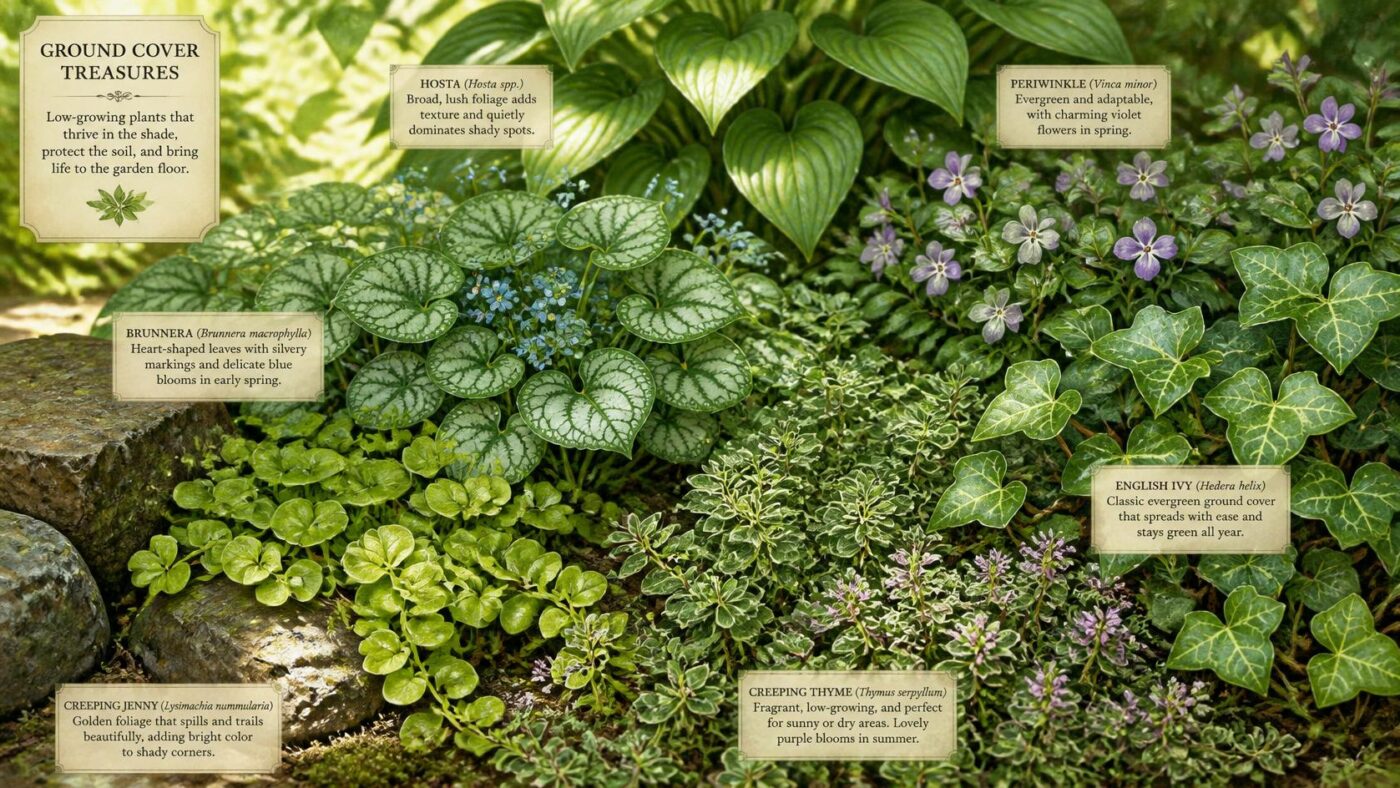
Bare soil, difficult slopes, and shady lawn patches can create ongoing maintenance problems. Ground cover plants can fill those spaces with foliage, flowers, and useful soil protection. The right choice depends on sunlight, climate, moisture, foot traffic, and how aggressively you want the plant to spread.
Groundcovers often need less mowing than turf once they become established. Dense growth can also reduce open space where weeds might germinate. Still, every species behaves differently, so matching the plant to the location matters.
Direct answer: Good groundcovers include creeping phlox, creeping thyme, sedum, bearberry, foamflower, wild ginger, Pennsylvania sedge, and native violets. Choose according to sunlight, soil moisture, USDA hardiness zone, and desired spread. Avoid aggressive species that may escape garden beds or threaten nearby natural areas.
Groundcover Choices at a Glance
| Plant | Light | Typical Strength | Good Use |
|---|---|---|---|
| Creeping phlox | Full sun | Spring flowers | Sunny borders and slopes |
| Creeping thyme | Full sun | Drought tolerance | Paths and dry sites |
| Low-growing sedum | Full sun | Heat tolerance | Rock gardens and dry soil |
| – | Sun to part shade | Evergreen foliage | Slopes and erosion-prone sites |
| Hens-and-chicks | Full sun | Dry-soil tolerance | Crevices and stone gardens |
| Barren strawberry | Sun to part shade | Native option | Beds and open patches |
| Pennsylvania sedge | Part shade to shade | Fine-textured foliage | Lawn alternative |
| Wild ginger | Part shade to shade | Woodland character | Beneath deciduous trees |
| Foamflower | Part shade | Native flowers | Woodland borders |
| Green-and-gold | Part shade | Long flowering season | Eastern native gardens |
| Native violets | Part shade | Wildlife value | Informal shaded areas |
| Partridgeberry | Shade | Evergreen habit | Woodland gardens |
| Woodland stonecrop | Shade | Evergreen foliage | Dry woodland edges |
| Creeping juniper | Full sun | Slope stability | Banks and large sunny areas |
| Barrenwort | Part to deep shade | Dry-shade tolerance | Beneath mature trees |
How to Choose Ground Cover Plants for Your Yard

Choosing the ideal ground cover plants starts with evaluating your site’s environmental conditions. Assessing how much light and moisture an area receives ensures your plants thrive and establish a dense, weed-suppressing carpet.
Next, check drainage and seasonal moisture before selecting anything. A species suited to dry gravel can fail quickly in soggy clay. Moisture-loving woodland species can struggle in exposed, hot beds.
Your USDA hardiness zone should guide perennial selection across the United States. Local climate still matters beyond the zone number. Heat, humidity, winter wind, and rainfall patterns can change plant performance.
Finally, consider how fast the plant spreads and where it can travel. Fast growth sounds attractive when covering bare soil. Yet aggressive spread can become a long-term removal problem near woods or unmanaged land.
Matching plants to their neighbors also prevents competition and overcrowding. Homoya’s cucumber companion planting guide explains how neighboring plants influence space and garden planning, which helps when a groundcover bed sits beside edibles.
Best Choices for Full Sun
1. Creeping Phlox
Creeping phlox forms a low mat covered with colorful spring flowers. It prefers sunny locations and well-drained soil. Iowa State Extension lists it among useful sunny groundcovers and notes its eastern North American origin.
Its compact height works especially well near rocks and retaining walls. The plant can also soften bed edges without hiding taller perennials. Give it enough drainage to prevent prolonged wet roots.
2. Creeping Thyme
Creeping thyme suits sunny spaces where dry conditions limit other plants. Its low habit makes it useful between stepping stones and along path edges. Established plants can tolerate more dryness than many moisture-loving alternatives.
Light foot traffic is possible with some varieties, but heavily traveled areas still need hard surfaces. Plant it where the foliage receives strong sunlight. Avoid sites that remain wet after rain.
3. Low-Growing Sedum
Low-growing sedums handle heat, sun, and lean soil surprisingly well. Succulent foliage stores moisture, which helps during dry weather. Many varieties also provide flowers that attract visiting pollinators.
Use sedum in rock gardens, gravel beds, and sunny slopes with good drainage. Heavy wet soil can cause decline, especially during cool periods. Different species vary in hardiness, so check the plant label before buying.
4. Bearberry
Bearberry offers evergreen foliage and a naturally spreading habit. It can be useful on sunny or partly shaded slopes. Its low form also provides interest outside the main flowering season.
This species performs best where soil and regional conditions fit its needs. It is a better choice than forcing turf onto difficult banks. Large slopes may still need erosion controls while new plants establish.
5. Barren Strawberry
Barren strawberry offers another option for sun or partial shade. Penn State Extension describes it as a low-maintenance native groundcover. It can fill bare spaces without the reputation attached to several aggressive traditional choices.
Its yellow spring flowers add seasonal color above green foliage. Spreading growth creates a tidy planted surface over time. It deserves consideration where gardeners want a North American native option.
Best Choices for Shade
6. Pennsylvania Sedge
Pennsylvania sedge creates soft, grasslike foliage beneath open tree canopies. It spreads more slowly than many traditional carpet-forming species. University of Maryland Extension lists it for partly shaded, drought-tolerant situations.
It works well for gardeners seeking a natural woodland appearance. Groups can create a flowing lawn-like effect without conventional turf. Site preparation remains important while the planting fills in.
7. Wild Ginger
Canadian wild ginger produces broad, heart-shaped leaves in shady areas. Iowa State Extension describes it as a native woodland wildflower that can form colonies. It prefers soil containing organic matter and dependable moisture.
The plant fits naturally beneath deciduous trees and along woodland paths. Its unusual flowers are usually hidden beneath the leaves. Avoid confusing the plant with culinary ginger, because they are unrelated.
8. Foamflower
Foamflower combines attractive foliage with delicate spring flowers. It grows naturally in woodland conditions and works especially well in part shade. University of Maryland includes it among native groundcover candidates for shaded sites.
Use it beside ferns, sedges, and other woodland perennials. Consistent moisture usually improves performance during establishment. Its restrained appearance suits naturalistic borders and shaded beds.
9. Green-and-Gold
Green-and-gold is an eastern native with cheerful yellow flowers. It tolerates partly shaded sites and spreads through rhizomes and seedlings. Maryland Extension lists it among drought-tolerant native choices for partial shade.
This option works well around woodland edges and informal paths. Its flowers can brighten spaces where turf often looks thin. Check regional suitability before planting outside its native range.
10. Native Violets
Native violets can function as useful low-maintenance coverage in difficult areas. Penn State Extension notes their value for wildlife and challenging landscape locations. Their spring flowers also bring color to lightly shaded yards.
Violets can self-seed, which suits informal gardens better than rigid planting schemes. They work well beneath compatible trees and shrubs. Gardeners should choose native species suited to their region.
Good Options for Dry or Difficult Areas
11. Hens-and-Chicks
Hens-and-chicks prefer bright sun and sharply drained soil. Their fleshy rosettes handle dry conditions once roots become established. They work especially well around rocks, walls, and shallow planting pockets.
Standing water presents a bigger problem than short drought periods. Gravelly soil can provide the drainage these plants need. Cold hardiness differs among selections, so verify the variety.
12. Woodland Stonecrop
Woodland stonecrop differs from many sun-loving sedums because it handles shade. University of Maryland lists it among native options for partly shaded, drought-tolerant sites. Its evergreen foliage can cover woodland edges without requiring tall growth.
This species is especially useful where dry shade limits common flowering perennials. It spreads close to the soil and fits beneath larger plants. Local native nurseries can help confirm regional suitability.
13. Barrenwort
Barrenwort is valuable beneath trees because established plants can tolerate dry shade. Iowa State Extension recommends it for partial to heavy shade. Moist, well-drained soil remains preferable when conditions allow.
Spring flowers rise above heart-shaped foliage in several colors. Many types spread gradually rather than racing across a bed. That controlled habit can make maintenance easier near shrubs and pathways.
Groundcovers for Slopes and Erosion-Prone Areas
14. Creeping Juniper
Creeping juniper provides woody evergreen coverage across sunny banks. Its spreading branches can help protect exposed soil after establishment. It works best where enough horizontal room exists for mature growth.
Planting vegetation can reduce runoff and sediment compared with leaving soil bare. New slopes may still need temporary stabilization during establishment. Severe erosion problems require broader drainage or grading solutions.
15. Mixed Native Plantings
A single-species carpet is not always the strongest ecological choice. Mixed native sedges, flowers, and low perennials can provide broader habitat value. They can also create seasonal interest across a larger planting area.
Penn State recommends combining suitable native plants for some challenging slopes. Species should match sunlight, moisture, salt exposure, and local conditions. A regional extension office can help narrow those choices.
Groundcovers to Use With Caution
Traditional recommendations often include periwinkle, English ivy, Japanese pachysandra, bugleweed, and creeping Jenny. Several extension programs now warn about invasive or aggressive behavior from these plants. Their status can differ by state, so local invasive-species guidance should take priority.
Periwinkle offers fast evergreen coverage, but that speed can become a problem. Maryland Extension says it can escape into natural areas and crowd native wildflowers. Planting native or better-behaved alternatives can reduce that risk.
How to Plant a New Groundcover Area
Remove perennial weeds before planting because they become harder to reach later. Loosen compacted soil where appropriate and address drainage problems first. Add organic matter only when the chosen species benefits from it.
Space individual plants according to their expected mature spread. Wider spacing costs less initially but takes longer to close. Closer spacing gives faster coverage but requires more plants.
Water new transplants consistently while roots establish. Mulch lightly between plants to protect exposed soil and limit weeds. Reduce supplemental watering gradually once the species becomes established.
Watch the planting edge during the first growing seasons. Trim or divide spreading stems before they enter lawns or neighboring beds. A physical edging strip can help control species that spread by runners.
Gardeners building broader plant-care skills can also use Homoya’s prayer plant care handbook and Swiss cheese plant guide. Those guides focus on indoor plants, but both reinforce the importance of matching care to growing conditions.
Should You Replace Your Lawn With Groundcover?
Replacing small problem areas often makes more sense than removing every section of turf. Steep banks, narrow strips, shaded tree areas, and rarely used corners are strong candidates. Groundcovers are less suitable where children, pets, or regular foot traffic require a durable surface.
Start with one manageable section and observe it through several seasons. You will learn how quickly the selected species spreads in your climate. That test also shows whether irrigation, pruning, or edging demands fit your maintenance goals.
Frequently Asked Questions
What are the best ground cover plants for a U.S. yard?
The best choice depends on your region and planting conditions. Creeping phlox and sedum suit many sunny sites, while wild ginger and foamflower prefer shade. Native sedges, violets, and other regional species can provide useful alternatives to aggressive traditional selections.
Which groundcovers need the least water?
Sedum, hens-and-chicks, creeping thyme, and some creeping junipers handle dry conditions after establishment. Their drainage requirements still vary. Newly planted specimens need dependable watering until roots expand into surrounding soil.
What works under trees where grass will not grow?
Wild ginger, Pennsylvania sedge, foamflower, woodland stonecrop, and barrenwort can handle certain shaded conditions. Tree roots create both shade and moisture competition. Choose species based on whether the location stays moist or becomes dry.
Can groundcovers stop weeds completely?
Dense established growth can suppress many weeds by reducing open soil and available light. It cannot guarantee a weed-free bed. Early weeding remains necessary while new plants spread and establish.
Are groundcovers good for erosion control?
Many spreading plants help protect soil from rainfall and surface movement. The best species depends on slope, soil, drainage, and climate. Serious erosion may require grading, drainage work, mulch, or erosion-control materials alongside vegetation.
When is the best time to plant them?
Spring and early fall work well for many perennial species because temperatures are moderate. Regional climate and individual plant requirements can change the ideal timing. Give roots enough time to establish before extreme heat or frozen soil arrives.
Build a Better Ground Layer
A successful planted carpet starts with site conditions rather than appearance alone. Match sunlight, moisture, hardiness, and spreading behavior before buying plants. Favor regionally suitable natives when they meet your design goals.
Begin with the hardest part of your yard instead of replacing everything at once. Monitor how the planting behaves through a full growing season. That measured approach can produce a lower-maintenance yard without introducing another long-term garden problem.