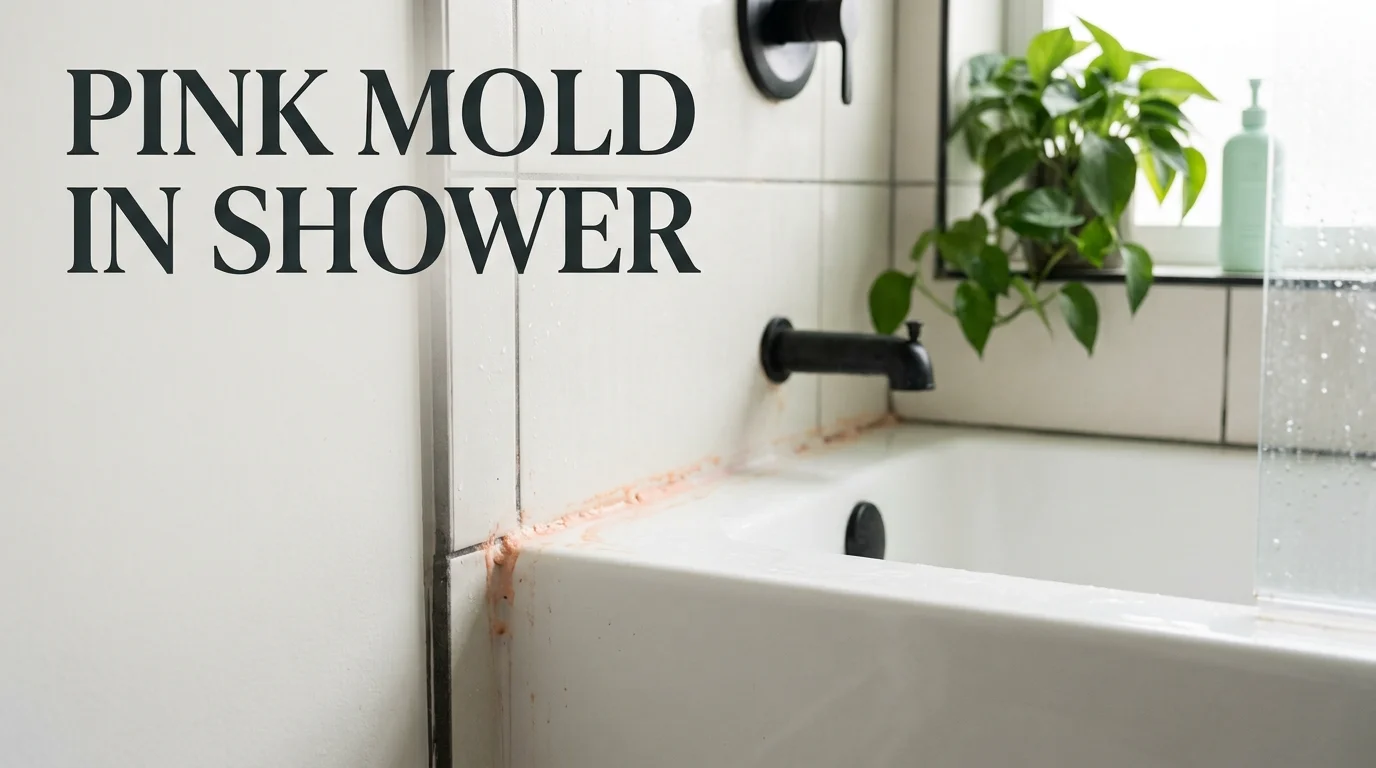
Finding pink mold in shower corners can make an otherwise clean bathroom look neglected. The pink or orange film is usually bacteria, not true mold. Removing the film matters, but controlling moisture and residue helps prevent it from coming back.
| Quick fact | What you should know |
|---|---|
| What it usually is | A bacterial biofilm, often linked to Serratia marcescens |
| Common color | Pink, orange, reddish, or salmon |
| Common locations | Grout, caulk, drains, shower curtains, corners, and soap dishes |
| Main growth factors | Moisture, warmth, soap residue, and organic debris |
| Basic response | Clean the surface, disinfect appropriately, rinse, and dry |
| Prevention | Improve ventilation, remove residue, and keep wet surfaces dry |
| Higher-risk households | Extra care is sensible when someone has a weakened immune system |
Quick answer: The pink slime in a shower is commonly Serratia marcescens, a bacterium that grows in damp areas. Clean the affected surface with a compatible bathroom cleaner or disinfectant, then rinse and dry it. Better ventilation, routine cleaning, and fewer wet surfaces can reduce repeated growth.
What Is the Pink Slime in Your Shower?
The pink residue is often called mold because it appears in wet bathroom areas. In many cases, though, the organism involved is Serratia marcescens. The CDC notes that this bacterium can appear as pink, orange, or red discoloration in damp bathrooms.
The organism can settle on shower walls, grout, caulk, tubs, and drains. It grows more visibly where moisture remains after bathing. Soap residue and other organic material can also help a biofilm develop.
Color alone cannot identify every bathroom growth with certainty. Actual fungi can appear in several colors, including pinkish shades. Persistent musty odors, water damage, or spreading fuzzy growth deserve closer investigation.
Is Pink Mold in Shower Areas Dangerous?
For most healthy people, household exposure to Serratia marcescens does not usually cause illness. Cleveland Clinic says most people do not become sick from environmental colonies in their homes. Still, the bacterium can cause infections under certain circumstances.
People with weakened immune systems should take greater care around contaminated surfaces. Open wounds and certain medical conditions can also increase the risk of infection. Avoid touching the residue with bare hands if you have cuts or irritated skin.
Don’t confuse this bacterial film with all types of bathroom mold. True indoor mold can aggravate allergies or breathing problems for susceptible people. Correct any significant moisture problem instead of repeatedly hiding visible growth.
How to Remove the Pink Film Safely

Small areas on washable bathroom surfaces are usually manageable with routine household cleaning. Check the surface manufacturer’s instructions before applying any cleaner. Wear gloves, ventilate the room, and avoid combining different cleaning chemicals.
1. Clear the Shower Area
First, remove bottles, soap dishes, razors, mats, and other loose items. Wash reusable accessories with visible residue. Discard items that cannot be cleaned effectively or have badly deteriorated surfaces.
2. Wash Away Soap and Surface Grime
Apply a surface-safe bathroom cleaner according to its label. Loosen soap film with a sponge or soft brush. Removing this layer helps the following cleaning step reach the bacterial film more effectively.
For larger tile areas, powered scrubbing can reduce repetitive hand work. Homoya’s electric spin scrubber guide explains brush selection and safe cleaning techniques for washable bathroom surfaces. Homoya electric spin scrubber guide
3. Clean the Discolored Area
Scrub the pink or orange film from grout, tile, caulk, or other compatible surfaces. Use a cleaner approved by the surface manufacturer. Allow labeled disinfectants to remain in contact for the required time before rinsing.
The CDC says household mold on hard surfaces can be cleaned with household products, soap, water, or suitable bleach solutions. Never mix bleach with ammonia or other cleaners. Mixing household chemicals can create dangerous fumes.
4. Rinse the Surface
Rinse away loosened residue and any remaining cleaner, as directed by the product instructions. Pay attention to grout joints, corners, and areas around fixtures. Leftover residue can collect more soap and debris.
5. Dry the Shower
Use a squeegee or clean towel to remove standing water. Leave the shower enclosure open when possible. Run the bathroom exhaust fan to move humid air outdoors.
If your bathroom stays damp long after you bathe, your ventilation may need attention. Homoya’s bathroom fan installation guide covers placement, ducting, sizing, and maintenance considerations. Homoya bathroom fan installation guide
Why Does the Pink Film Keep Coming Back?
Repeated growth usually means the shower still provides favorable conditions. Water can remain on grout, caulk, curtains, bottles, and recessed corners. Warm temperatures and accumulated bathroom residue create another opportunity for the biofilm to establish itself.
Cleaning frequency can also affect recurrence. Waiting until heavy discoloration appears lets more residue build up. Light routine cleaning makes the environment less favorable between deeper cleaning sessions.
A plumbing leak can create a different and more persistent moisture problem. Check around faucets, drains, tub connections, and nearby walls for unexplained dampness. Homoya’s bathtub plumbing guide covers common components and leak points worth inspecting. Homoya bathtub plumbing guide
How to Prevent Pink Residue From Returning
Prevention focuses on removing the conditions that support repeated bacterial growth. You do not need to keep the shower completely sterile. Instead, limit lingering moisture and the residue that collects on frequently wet surfaces.
- Run an exhaust fan during and after bathing.
- Squeegee wet shower walls and glass.
- Wash shower curtains and liners regularly.
- Rinse heavy soap residue from corners and shelves.
- Keep bottles from sitting in pools of water.
- Clean drains and removable soap dishes regularly.
- Repair plumbing leaks instead of cleaning around them.
- Replace deteriorated caulk that cannot be cleaned.
Ventilation deserves particular attention in bathrooms without windows or strong airflow. The CDC recommends bathroom exhaust fans that vent outdoors to help control moisture. Reducing indoor moisture also helps discourage actual fungal growth.
Surface condition matters too. Cracked grout and failing caulk can trap water, slowing drying. Replacing damaged material can be more effective than repeatedly scrubbing the same worn area.
Pink Bacteria Versus Actual Mold
Knowing what you are seeing can guide the next cleaning decision. A slimy, salmon-colored film often points to bacterial growth. Fuzzy growth, strong musty odors, or widespread staining may suggest a different moisture issue.
| Sign | Pink bacterial film | Possible true mold |
|---|---|---|
| Typical appearance | Slimy or smooth film | Often spotty, fuzzy, or patchy |
| Common colors | Pink, orange, red | Black, green, white, brown, or other colors |
| Frequent location | Wet shower surfaces | Any persistently damp material |
| Common driver | Moisture plus surface residue | Persistent moisture on suitable material |
| First response | Clean, disinfect appropriately, dry | Remove growth and correct moisture source |
The comparison is useful, but appearance cannot provide a laboratory identification. CDC guidance says mold color does not reliably show how dangerous a growth may be. Correcting excess moisture remains important whenever fungal growth is suspected.
When Should You Consider Professional Help?
A thin film on washable shower surfaces usually doesn’t require professional remediation. The situation changes when growth appears behind walls, under flooring, or across water-damaged materials. Repeated staining alongside leaks can also indicate a hidden moisture source.
Seek professional assessment when affected materials are deteriorating or cannot stay dry. Structural water damage needs more than surface cleaning. Larger mold problems may require specialized containment and removal methods.
Homoya also covers more extensive moisture and remediation issues in its attic mold removal guide. The same core principle applies throughout a house. Removing visible growth without correcting the moisture source often leads to another cleanup later. Homoya attic mold removal guide
Frequently Asked Questions
What causes pink mold in shower corners?
The discoloration is commonly associated with Serratia marcescens growing on damp bathroom surfaces. Moisture, warmth, and accumulated organic residue support visible biofilm formation. Corners often stay wet longer, which makes them common trouble spots.
Is the pink stuff actually mold?
Usually, the slimy pink or orange bathroom film is bacterial rather than fungal. Serratia marcescens often causes this type of discoloration. Other organisms can look similar, so appearance alone is not definitive.
Can vinegar remove the pink residue?
Vinegar is used for many bathroom cleaning jobs, but surface compatibility matters. A labeled disinfectant may provide clearer instructions for bacterial contamination. Never combine vinegar with bleach or other incompatible household chemicals.
Can bleach remove it?
Bleach products can disinfect compatible nonporous surfaces when the label allows it. Follow the product’s dilution, ventilation, and contact-time instructions. Never mix bleach with ammonia, acids, or other cleaning chemicals.
Why does the pink film return after cleaning?
Recurring film usually means moisture and surface residue remain available. Slow-drying caulk, shower curtains, drains, and corners provide favorable conditions. Better drying and more frequent routine cleaning can interrupt that cycle.
Should I replace pink-stained caulk?
Cleaning may work when the residue remains on the caulk’s surface. Replacement makes more sense when caulk is cracked, loose, deeply stained, or deteriorating. New caulk will still need proper ventilation and routine cleaning afterward.
Keep the Shower Dry, Not Merely Clean
Removing visible residue solves only the immediate problem. Drying surfaces and controlling bathroom humidity address the conditions that help it return. Check ventilation and plumbing when the same areas keep discoloring.
Start with routine cleaning, good airflow, and a quick post-shower drying habit. Repair leaks or failed caulk when moisture persists despite those changes. Those simple measures can keep shower surfaces cleaner while reducing conditions that support bacteria and mold.