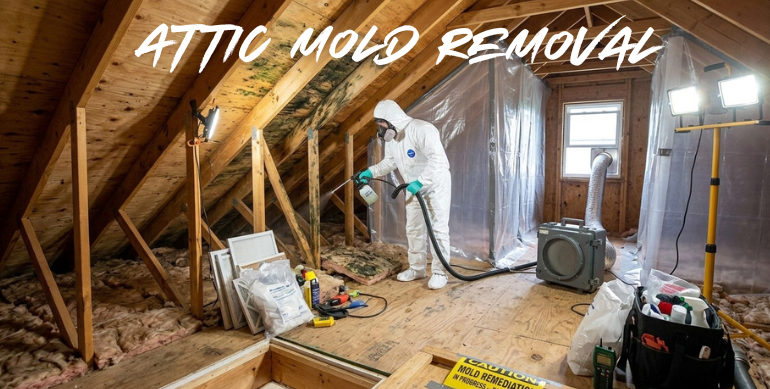
Mold growth in attics is a common yet serious problem that can compromise your home’s structural integrity and affect indoor air quality. Often hidden behind insulation, roof decks, and ventilation systems, attic mold often goes unnoticed until it spreads extensively, leading to costly repairs and potential health hazards for residents. Elsewhere on the site: Attic Stairs.
The presence of mold can exacerbate respiratory issues, allergies, and other health concerns, making it a priority to address promptly. Professional attic mold removal eliminates mold while minimizing health risks and preventing future infestations.
As mold remediation can be a complex process, it’s crucial to understand the underlying causes and implement appropriate solutions. This article provides a detailed guide covering the causes of attic mold, best practices for removal, common mistakes to avoid, effective cleaning techniques, and strategies to protect your home from future mold growth.
By taking proactive measures and being informed, homeowners can maintain a safe and healthy living environment while preserving the integrity of their property. Additionally, understanding the importance of ventilation and moisture control in attics will further equip you to prevent future mold issues effectively.
| Category | Key Actions / Details | Benefits |
| Inspection | Look for mold patches, water stains, and damaged insulation; check the roof, vents, and plumbing; use moisture meters. | Identifies problem areas and moisture sources to ensure complete remediation |
| Drying & Ventilation | Use dehumidifiers and fans, improve ventilation, and ensure vents are unblocked. | Reduces humidity, prevents future mold growth. |
| Air Scrubbing & HEPA Filtration | HEPA air scrubbers capture airborne spores and maintain negative air pressure | Prevents contamination of other rooms and improves air quality |
| Insulation Replacement | Replace moldy insulation with dry, treated, or moisture-resistant materials. | Prevents recurring mold problems and improves energy efficiency |
| Moisture Control Solutions | Install ridge, soffit, or gable vents; use vapor barriers or dehumidifiers | Maintains consistent dryness and prevents future infestations |
| Common Mistakes to Avoid | Ignoring moisture sources, improper containment, inadequate protection, and incomplete cleaning | Prevents recurring mold problems and ensures safe, effective remediation |
Understanding Attic Mold
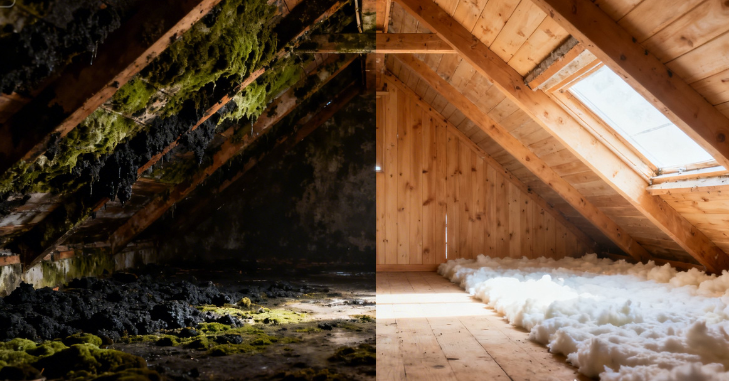
What Causes Mold in the Attic?
Mold thrives in environments with moisture, warmth, and organic materials. Common causes of attic mold include:
- Roof leaks: Damaged shingles, flashing, or seals allow water to enter.
- Condensation: Poor ventilation traps humidity inside the attic.
- Plumbing leaks: Pipes running through or above the attic can leak unnoticed.
- Insulation problems: Wet or compressed insulation creates ideal conditions for mold growth.
Identifying the source of moisture is critical before beginning any mold remediation.
Health and Structural Risks
Attic mold can pose several risks:
- Respiratory issues: Mold spores can trigger allergies, asthma, and sinus problems.
- Structural damage: Prolonged moisture can weaken roof decking and wooden beams.
- Odor: Mold produces a musty smell that can permeate living areas.
- Decreased property value: Unaddressed mold can reduce resale value and increase repair costs.
Best Practices for Attic Mold Removal
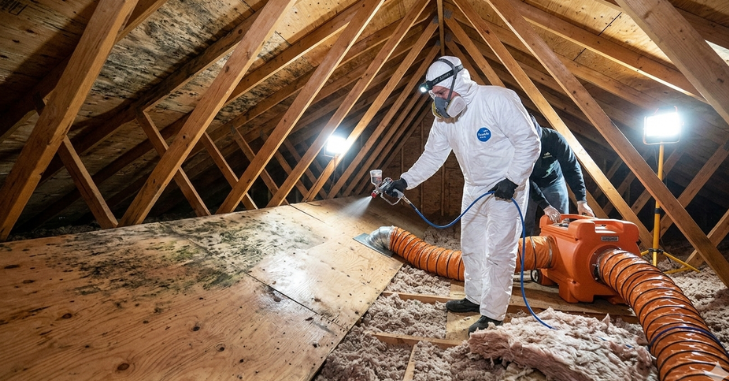
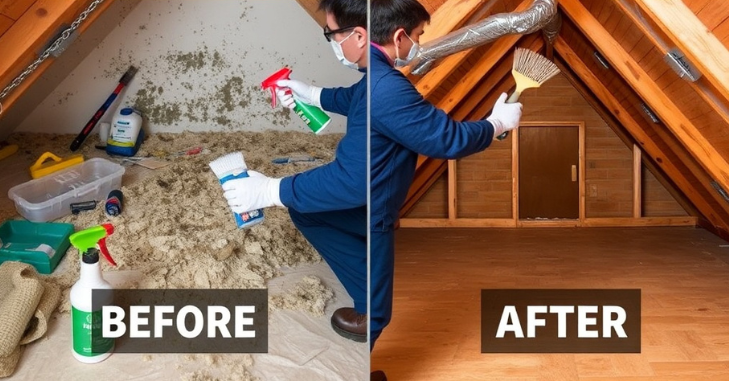
Professional attic mold removal requires a combination of safety, thorough cleaning, and preventive measures. Each step is critical to ensure that mold is completely removed and does not return.
1. Conduct a Thorough Inspection
Before any remediation work begins, a complete attic inspection is essential. This involves looking for visible mold patches, water stains, and damaged insulation. Moisture meters can be used to detect damp areas hidden behind walls or insulation. Additionally, it is important to check the roof, vents, and plumbing for leaks that could contribute to ongoing mold growth. A detailed inspection ensures that all problem areas are identified before remediation starts.
2. Containment and Safety Measures
Containment is necessary to prevent mold spores from spreading to other parts of the home. The attic entry should be sealed with plastic sheeting, and negative air machines can be used to control airflow and capture airborne spores. Workers must be equipped with personal protective equipment (PPE), including respirators, gloves, and goggles, to reduce exposure to harmful mold.
3. Remove Contaminated Materials
In many cases, workers may need to completely remove certain materials. This includes wet or mold-infested insulation, damaged wood or drywall, and any porous materials that cannot be cleaned effectively. In contrast, they can often clean and disinfect non-porous surfaces without removal, making proper assessment essential.
4. Cleaning and Disinfection
Once contaminated materials are addressed, surfaces should be scrubbed with appropriate cleaners and mold-killing solutions. Bleach should be avoided on wood, as it can damage the material. Applying antimicrobial treatments afterward helps prevent mold regrowth and ensures long-term protection.
5. Drying and Ventilation
After cleaning, the attic must be thoroughly dried using dehumidifiers and fans. Improving ventilation reduces humidity, helping prevent future mold growth. It is also important to ensure that vents are not blocked by insulation or debris, maintaining proper airflow throughout the attic.
Common Mistakes to Avoid
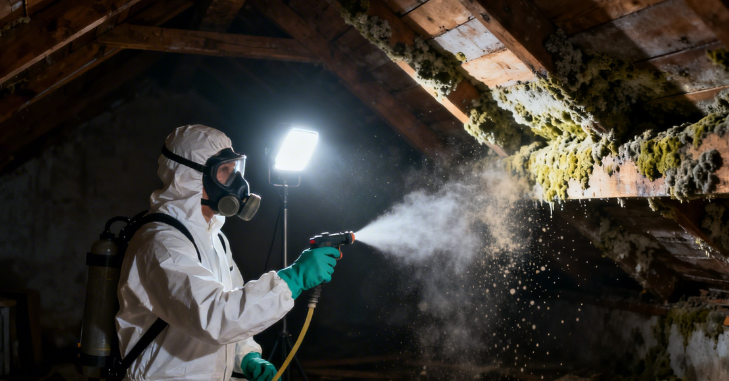
Even minor errors during attic mold removal can lead to recurring problems.
DIY Mistakes
- Ignoring the source of moisture: Without fixing leaks or ventilation, mold will return.
- Using the wrong cleaning agents: Some chemicals can spread spores or damage materials.
- Inadequate protection: Mold exposure can cause health issues without proper PPE.
Professional Pitfalls
- Incomplete inspections: Missing hidden mold in rafters, insulation, or ductwork.
- Improper containment: Allowing spores to spread to living areas.
- Skipping preventive measures: Failing to install dehumidifiers or improve ventilation after removal.
Effective Techniques for Attic Mold Removal
HEPA air scrubbers are highly effective in capturing airborne mold spores, preventing them from spreading throughout the home. Maintaining negative air pressure during remediation further prevents spores from contaminating other rooms, which helps keep the living areas safe while treating the attic.
After cleaning, applying mold-resistant coatings or sealants to wooden beams helps protect them from future infestations. Encapsulation not only prevents mold regrowth but also preserves the structural integrity of the wood, ensuring that the attic remains safe and stable.
Moldy insulation must be removed and replaced with dry, treated insulation to prevent recurring mold problems. Homeowners may also consider using spray foam or other moisture-resistant insulation options, which provide better protection against humidity and water intrusion.
Preventing Future Mold Growth
- Conduct periodic attic inspections, especially after storms.
- Maintain roof integrity by promptly repairing shingles, flashing, and seals.
- Keep humidity levels below 60% inside the attic.
- Avoid storing organic materials, cardboard, or paper in the attic.
- Ensure HVAC and duct systems do not contribute to moisture buildup.
Signs You Need Professional Attic Mold Removal
| Sign | Description |
| Visible mold | Black, green, or white patches on wood, insulation, or drywall |
| Musty odor | Persistent, strong smell that worsens over time |
| Water stains | Discoloration on walls, ceilings, or beams indicating leaks |
| Health issues | Respiratory problems, allergies, or asthma symptoms in household members |
| Roof damage | Shingles, flashing, or insulation compromised by moisture |
Hiring a Professional Mold Removal Service
When considering professional attic mold removal:
- Look for certified mold remediation specialists.
- Confirm experience with attics and structural mold.
- Check customer reviews and ask for references.
- Request a detailed plan including inspection, removal, and preventive steps.
- Ensure the company follows EPA and OSHA safety guidelines.
Conclusion
Attic mold is not just an aesthetic issue; it can compromise your home’s structure and your family’s health. Professional attic mold removal involves careful inspection, containment, cleaning, and moisture control. Avoiding common mistakes, using effective techniques, and implementing preventive measures ensures long-term protection.
Regular monitoring, proper ventilation, and timely repairs are the key to preventing mold from returning. By hiring certified professionals and following best practices, homeowners can safely remove mold, restore their attic, and protect their property from further damage. Attic mold removal is an investment in both health and the longevity of your home.
Want to know about Trisodium Phosphate Cleaner: A Powerful Solution for Deep Cleaning, Surface Preparation, and Professional-Grade Results Check out our Cleaning category.
FAQs
Effective practices include thorough inspection, containment to prevent spore spread, removal of contaminated materials, proper cleaning and disinfection, drying, and improved ventilation.
Small, isolated areas can sometimes be addressed with proper safety equipment and cleaning solutions. However, professional attic mold removal is recommended for extensive infestations to ensure complete remediation and prevent health risks.
Signs include visible mold patches, water stains, musty odors, damp insulation, or unexplained health symptoms such as coughing or sneezing while in the home.
Attic mold is fungal growth that occurs in damp, poorly ventilated spaces. It can damage wood and insulation, reduce indoor air quality, and cause respiratory issues, allergies, or other health problems for household members.