

Underpinning mobile home is a critical process for strengthening and leveling mobile homes, ensuring stability in both urban and rural real estate markets. Homes with uneven foundations risk sagging, structural damage, and decreased resale value. Depending on size and soil type, properties may require 15–30 concrete or steel piers. Costs range from $2,500 for smaller homes to $8,500 for larger structures, including labor and high-quality materials.
Proper underpinning protects plumbing, flooring, and electrical systems while increasing rental potential. By reinforcing homes with durable materials like steel and treated wood, investors and homeowners can maximize ROI, reduce maintenance expenses, and ensure long-term structural safety through expert underpinning mobile home.
| Basics | Details |
| Understanding Home | Stabilizes uneven, weak mobile homes |
| Investor Benefits | Increases value and rental potential |
| Key Materials | Concrete, steel, wood, reinforced footings |
| Material Strength | Concrete 3,000–4,000 psi steel 12,000 lbs |
| Tools Required | Hydraulic jacks, levels, shovels, safety gear |
| Equipment Use | Jack’s lift levels ensure the correct height. |
| Underpinning Steps | Inspect, lift, place piers, and compact soil. |
| Professional Process | Ensures durability and reduces future settlement |
| Cost Range | Small $2,500–$4,000, large $6,500–$8,500 |
| Labor Portion | Typically, 40–50 percent of the total cost |
| Key Locations | Clay soil, flood zones, rural, coastal |
| Piers Placement | 20–25 spaced 6–8 feet evenly |
| Maintenance Tips | Inspect piers, floors, and drainage regularly. |
| Investment Advantage | Higher occupancy and resale appreciation |
| Common Errors | Uneven leveling, poor materials, skipped checks. |
| Long-Term Benefits | Safety, structural longevity, and higher returns |
Understanding the Underpinning Mobile Home
Underpinning mobile home is essential for leveling, strengthening, and stabilizing homes in real estate markets. Properties with uneven foundations can lose value or become difficult to sell. Reinforcement prevents sagging, structural stress, and potential insurance complications. Homes may require 15–30 concrete or steel piers, depending on size, weight, and soil type, to ensure safety and resale value.
Why Real Estate Investors Should Consider Underpinning?

Investors benefit from underpinning as it increases property value, minimizes future repair costs, and attracts buyers. A well-supported mobile home can command higher rental rates, especially in urban or high-demand areas. Proper underpinning reduces maintenance costs, prevents water damage, and ensures compliance with building codes, making the property more marketable and profitable over time.
Key Materials
Durable materials ensure long-lasting foundation support. Concrete blocks, steel piers, treated wood, and reinforced footings are standard. Concrete strength typically ranges from 3,000–4,000 psi, while steel piers can support 10,000–12,000 lbs. High-quality materials reduce settlement risks, provide long-term stability, and increase investor confidence in property durability and rental potential.
Tools and Equipment
Underpinning mobile home requires hydraulic jacks, levels, shovels, measuring tapes, concrete mixers, and safety equipment. Jacks lift sections for precise pier placement. Levels ensure uniform height across the home. Drills, braces, and torque wrenches help secure supports properly. Proper tools and techniques guarantee safety, efficiency, and professional results, making the property more attractive to buyers or tenants.
Step-by-Step Underpinning Process
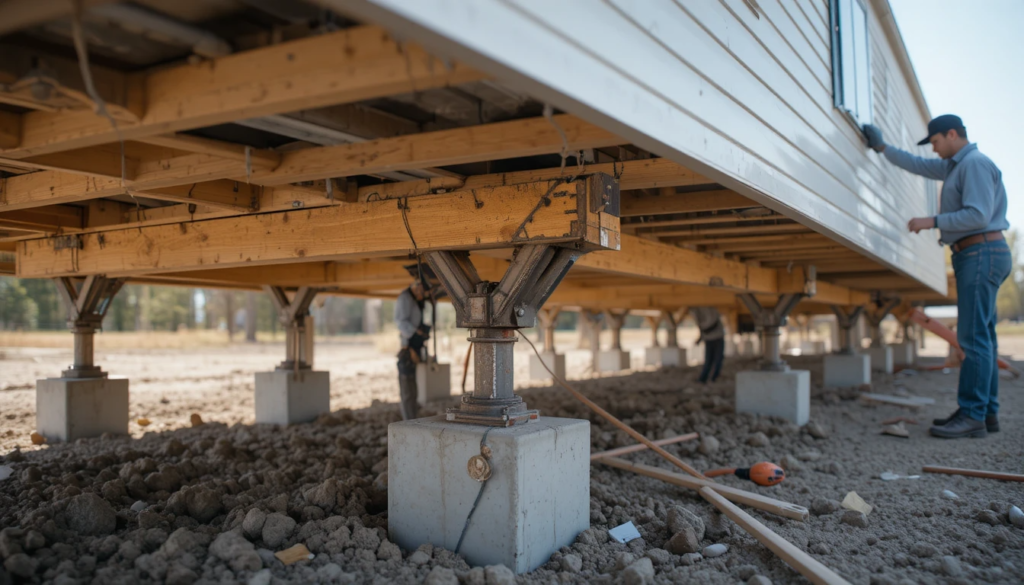
The process starts with site inspection, soil assessment, and measuring the home’s frame. Sections are lifted using hydraulic jacks, and piers or blocks are inserted at planned intervals. Levels ensure correct height, and supports are secured. Backfilling and soil compaction complete the procedure. Following a professional process ensures durability, reduces settlement, and improves property marketability for resale or rental.
Cost
Costs vary depending on home size, materials, and labor. Small homes range from $2,500–$4,000, while larger homes with steel supports may reach $6,500–$8,500. Labor often accounts for 40–50% of the total cost. Investing in proper underpinning prevents expensive structural repairs later, protecting property value and maximizing ROI for real estate investors or homeowners.
Locations
Underpinning mobile home is especially important in clay soil regions, flood-prone areas, and older mobile home parks. Homes in coastal or rural locations are also at higher risk of settlement. Ensuring proper support increases safety, reduces maintenance costs, and enhances market value. Investors should prioritize underpinning in properties with high rental potential or in high-demand neighborhoods.
Quantity and Placement of Supports

- Proper placement and quantity of piers are vital for stability.
- A 1,500 sq. ft. home may require 20–25 piers spaced 6–8 feet apart.
- Correct spacing ensures even load distribution and prevents sagging.
- Steel and concrete piers offer better long-term performance than wood.
- Accurate placement increases investor confidence and ensures the home remains structurally sound over decades.
Maintenance and Inspection
Regular inspections after underpinning help prevent future issues. Check for shifting piers, cracks, or uneven floors. Proper drainage prevents soil erosion, which can affect the foundation. Periodic maintenance ensures the home remains level, safe, and marketable, maintaining its value for resale or rental purposes. Neglecting maintenance can lead to costly repairs and reduced property profitability.
Real Estate Investment Benefits
- Underpinning mobile home increases property value and improves rental potential.
- Homes with strong foundations are easier to insure and more attractive to buyers.
- Reducing settlement and structural risk enhances long-term ROI.
- Investors gain higher occupancy rates, lower repair costs, and a safer asset.
- Well-maintained homes can appreciate faster in competitive real estate markets.
Common Mistakes to Avoid

Mistakes include uneven leveling, using low-quality materials, skipping inspections, or lifting sections too quickly. Improper installation can lead to future sagging, cracks, or plumbing damage. Following professional procedures and using durable materials ensures long-term stability, protects property value, and prevent costly issues for real estate investors and homeowners alike.
Long-Term Advantage
Proper underpinning increases home safety, resale value, and structural longevity. Mobile homes with well-maintained foundations resist environmental damage, reduce maintenance costs, and maintain tenant satisfaction. For real estate investors, underpinning improves profitability, ensures compliance with building codes, and secures long-term returns, making it a wise investment strategy for sustainable property management.

Conclusion
Underpinning mobile home is essential for ensuring long-term stability, safety, and enhanced property value. Homes with properly reinforced foundations experience fewer structural issues, improved energy efficiency, and higher appeal to buyers or tenants.
Regular inspections, quality materials, and expert installation reduce maintenance costs and prevent future damage. For real estate investors and homeowners seeking durability and profitability, careful planning and professional execution remain crucial, making underpinning mobile home a reliable and valuable long-term investment.
If you want to read an interesting article about it, explore our Real Estate category.
FAQs
Site-built homes on a similar raised structure use the same vocabulary of piers, girders and shims. Our guide to pier and beam foundation repair covers shimming, re-levelling and pier replacement in detail.
Reinforcing a mobile home foundation prevents structural stress, sagging, and water damage. It increases property value, reduces maintenance costs, and improves overall durability for long-term use.
Costs range from $2,500 for small homes to $8,500 for larger structures, depending on size, materials, labor, and the number of piers required for proper support.
Durable materials like concrete, steel piers, treated wood, and reinforced footings provide stability, reduce settlement risks, and ensure the foundation safely supports the home for decades.
The process usually takes a few days, including site inspection, lifting, pier installation, leveling, backfilling, and curing, depending on home size and foundation complexity.
Minor adjustments may be possible with tools, but professional underpinning ensures safety, accurate leveling, proper pier placement, and compliance with building codes.

