A HomeServe home warranty can make sense if you want protection against specific plumbing, electrical, HVAC, water line, or appliance failures. The catch is that plans, prices, limits, and fees can vary by location. Before enrolling, compare the exact contract available for your ZIP code rather than relying on a single advertised price or third-party review.
Short answer: HomeServe stands out because it lets homeowners buy targeted coverage instead of relying only on broad, whole-home protection. That approach can keep costs down when one system concerns you most. It may be less attractive if you want a single contract that covers nearly everything, with consistent pricing and terms across locations.
| Key question | What to know |
| Provider | HomeServe USA |
| Coverage style | Targeted repair plans plus broader home-system and appliance options |
| Common covered areas | Plumbing, drainage, electrical, HVAC, water heaters, and selected appliances |
| Entry pricing | Many individual repair plans are advertised from $4.99 to $11.99 per month. |
| Broader plan pricing | Can be much higher and varies by location. |
| Availability | Plans and benefits vary by ZIP code. |
| Waiting period | Many plans have a waiting period before service begins. |
| Best fit | Homeowners who want targeted protection for expensive systems or service lines |
HomeServe says its plans can cover repairs or replacements up to stated benefit limits. Availability, limitations, exclusions, and plan choices vary by location.
What Does a HomeServe Home Warranty Cover?

Coverage depends on the contract you buy. HomeServe offers protection for household systems such as plumbing, electrical lines, heating, cooling, water heaters, and drainage. It also sells appliance-focused and combination coverage.
HomeServe home warranty: The TotalHome Appliance option covers eight major appliances. Examples include refrigerators, washers, dryers, dishwashers, built-in microwaves, garage door openers, and cooking appliances. HomeServe states that covered appliances may qualify regardless of age, make, or model, subject to the contract terms.
Its TotalHome Combo option combines appliance and home-system coverage. The company lists coverage for eight appliances and 10 major systems, including heating, cooling, interior plumbing, electrical systems, ductwork, and water heaters.
| Coverage approach | Best for | Main advantage | Main tradeoff |
| Targeted system or service-line plan | One specific repair risk | Pay only for the protection you want. | Several separate plans may be needed. |
| Appliance coverage | Older kitchen or laundry equipment | Covers multiple common appliances | Benefit limits still apply |
| Combination coverage | Homeowners who want broader protection | Covers appliances and home systems | Higher monthly cost |
| Premium system protection | Homes with several aging systems | Covers a wider range of household infrastructure | May cost far more than entry-level plans |
If plumbing is your main concern, compare the contract with the potential cost of a major failure. Homoya’s sewer line replacement guide explains why underground pipe work can become a major household expense.
How Much Does Coverage Cost in 2026?
There isn’t one nationwide monthly price. Many individual repair plans are advertised at roughly $4.99 to $11.99 per month, although coverage is not available in every location. Broader packages can cost considerably more.
Some published examples show major differences between plan types. Home Appliance Repair Plus may start at around $15.83 per month, while Complete Plumbing and Premium Home Protection can cost substantially more. These figures should be treated as examples rather than universal prices.
Other location-based quotes also show wide pricing differences. In some areas, individual protection plans may cost less than $10 per month, while premium packages can exceed $70 per month. This variation reinforces why your ZIP-code-specific quote matters.
The same logic applies when deciding whether protection is worthwhile for equipment such as water heaters. Homoya’s tankless water heater buying guide can help you compare equipment options and potential replacement costs before paying for extra protection.
The Fine Print Matters More Than the Advertised Price

A low monthly price tells you little unless you also understand the benefit limit, exclusions, waiting period, and service-call rules.
HomeServe states that plan benefits, limitations, and exclusions vary. Coverage may also depend on eligibility requirements and the specific terms of your contract.
Check these points before you enroll:
- Maximum benefit: Find out how much the contract will pay per repair or policy term.
- Waiting period: Confirm when you can first request covered service.
- Replacement rules: Repair coverage does not always mean unlimited replacement.
- Excluded causes: Negligence and uncovered components can leave you responsible for the bill.
- Property eligibility: Some plans or benefits may not be available at your address.
- Renewal pricing: Check both the introductory rate and the future renewal cost.
- Service-call charge: Read the actual contract rather than assuming a fee mentioned in a third-party review applies to you.
The last point deserves extra attention. Published reviews do not always report the same service-call fee. The difference may reflect variations in plan or location, so verify the fee listed in your own agreement before buying.
Many plans also include a waiting period before coverage begins. Certain replacement benefits may require an even longer waiting period. Check the exact contract for the plan available in your area.
How the Claims Process Works
The claims process is designed to reduce the need to find a repair company yourself. Customers can typically submit a service request online, by phone, or through the provider’s app. You describe the problem, provide your availability, and wait for a service professional to be assigned to you.
A typical process looks like this:
- Check whether your contract covers the failed item.
- File the service request through an approved channel.
- Describe the problem and provide your scheduling availability.
- Allow the assigned professional to diagnose the failure.
- Confirm what the plan authorizes before approving additional work.
Keep your contract accessible throughout the process. Coverage decisions depend on the terms of your agreement, not on general marketing materials.
Pros and Cons to Consider
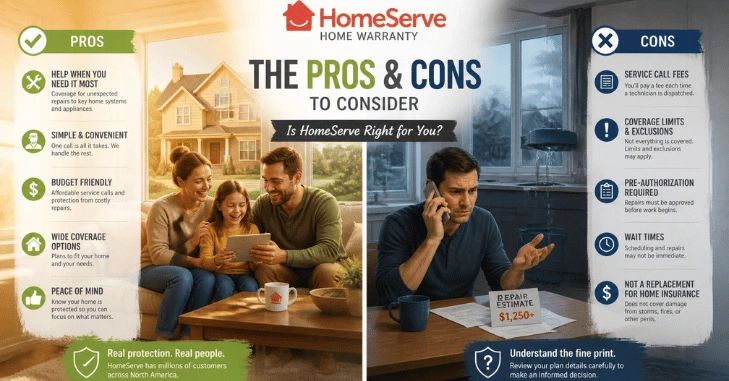
Pros
- Targeted plans let you protect specific household risks.
- Options include service lines that many homeowners worry about.
- Appliance and combination plans are available.
- Covered repairs are handled through an established service network.
- Low-cost individual plans are available in some areas.
Cons
- Pricing and availability vary by ZIP code.
- Coverage limits and exclusions differ between contracts.
- Buying several targeted plans can increase your total monthly cost.
- Waiting periods can delay when benefits begin.
- Published service-fee information is not always consistent across independent reviews.
HomeServe vs. a Traditional Broad Home Warranty
The biggest difference is flexibility. Many traditional home warranty providers build their plans around systems, appliances, or combined packages. HomeServe also offers these options, but it places greater emphasis on individual infrastructure risks. These can include exterior water lines, sewer lines, electrical systems, plumbing, heating, and other system-specific concerns.
Our verdict: Targeted protection is the strongest reason to consider this provider. If an aging sewer line or water system is your biggest financial concern, paying to protect that specific risk may make more sense than buying a large package.
A broad plan may be easier to manage if several appliances and systems are already old. Compare the total annual premiums to your repair budget and the contract’s maximum benefits.
Older properties may also have structural problems that a service contract will not cover. Homoya’s foundation cracks guide can help you distinguish structural warning signs from problems related to household systems.
Who Is a Good Candidate?

This type of coverage may suit you if:
- Your home has older plumbing, HVAC, electrical, or water-heating equipment.
- You would struggle to absorb a sudden four-figure repair bill.
- You want protection for one specific service line.
- You prefer having a service network arranged for you.
- The benefit limit is high enough to justify the annual premium.
It may be less useful if you already have a strong emergency fund and newer systems that remain under manufacturer warranties.
Before paying for appliance protection, review the age and condition of the appliances you own. Homoya’s Home Appliances section offers buying and maintenance information that can help with that assessment.
Final Verdict
HomeServe is most compelling for homeowners who want targeted protection for a specific, expensive system or service line. Its range of plumbing, electrical, HVAC, appliance, and combination options gives buyers several ways to match coverage to their actual risks.
HomsServe home warranty Don’t choose a plan simply because the introductory monthly price looks inexpensive. Get a quote for your address, read the benefit limits and exclusions, check the waiting period, and confirm every service charge.
Then compare the annual cost with the amount you could keep in a dedicated home-repair fund. That comparison will tell you far more about the plan’s value than any headline price.
Frequently Asked Questions
It can be worthwhile when the plan protects an aging system that would be expensive for you to repair. The value becomes less compelling if the annual premium approaches an amount you could comfortably save on your own. Always compare the benefit cap, exclusions, waiting period, and renewal cost before enrolling.
Its TotalHome Appliance plan states that covered appliances may qualify regardless of age, make, or model. Contract limits, exclusions, and other eligibility requirements still apply.
Selected plans cover exterior water lines and sewer or septic service lines. These products are a notable part of the company’s targeted repair-plan range. Availability depends on your location.
No. A home warranty or service plan serves a different purpose from homeowners insurance. A service plan generally focuses on covered repairs to specific systems or appliances, while homeowners insurance protects against certain losses and damage specified by the policy.
Enter your property’s ZIP code and review the specific plans offered for that address. Prices, benefits, limitations, and availability can vary by area.