
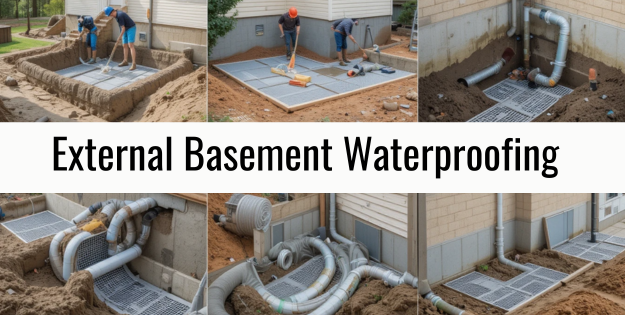
External Basement Waterproofing
Basements can be a blessing or a burden. On one hand, they provide valuable living or storage space. On the other hand, they are notorious for being the first part of a house to suffer from water damage. For homeowners, one of the most effective ways to defend against basement leaks, mold, and foundation issues is through external basement waterproofing.
Basements are often the most vulnerable areas of a home when it comes to water intrusion. Water damage can lead to structural issues, mold growth, and a decrease in property value. To safeguard your home, external basement waterproofing is a critical investment.
This comprehensive guide explores everything you need to know — from what external waterproofing involves to its methods, costs, benefits, and long-term value.
| Method | Average Cost Range | Key Benefits | Durability / Lifespan |
| Excavation & Foundation Sealing | $8,000 – $15,000 | Blocks water at its source, protects foundation walls | 25–40+ years |
| Drainage Tiles (French Drains) | $5,000 – $12,000 | Relieves hydrostatic pressure, channels water away | 20–30 years (with maintenance) |
| Exterior Waterproofing Membranes | $3 – $7 per sq. ft. | Flexible barrier against cracks and leaks | 30–50 years |
| Protective Drainage Boards | Often included in system cost | Shields membranes, improves water flow efficiency | 25–40 years |
| Grading & Landscaping Adjustments | $1,000 – $5,000 (varies) | Directs surface water away, prevents pooling | 10–20 years (requires upkeep) |
Why Basement Waterproofing Matters
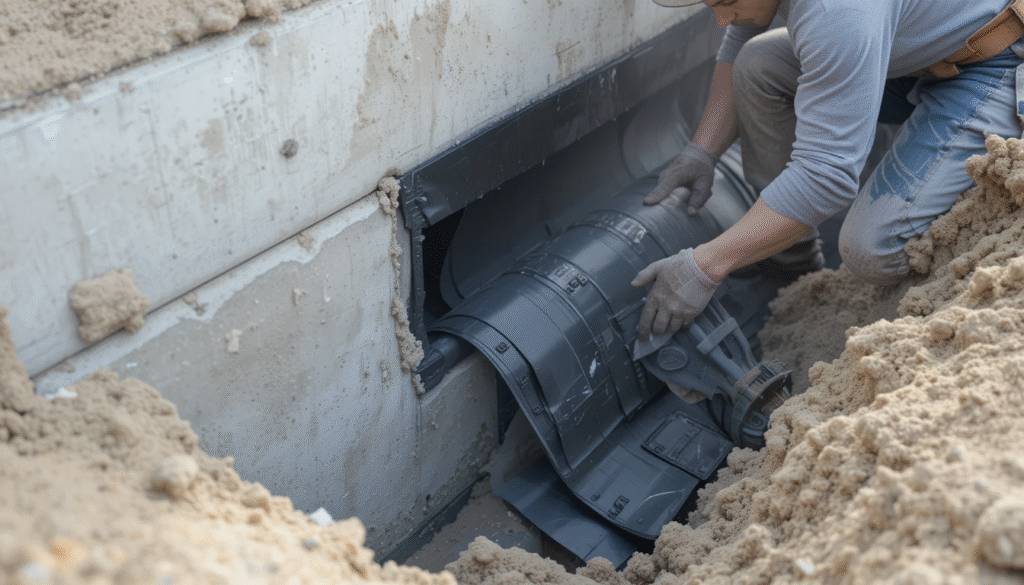
Basements are built below ground level, making them naturally prone to water intrusion. Soil absorbs rainwater, melting snow, and groundwater, which creates hydrostatic pressure against basement walls. Over time, even the most minor crack can allow moisture inside.
Unchecked basement leaks can lead to:
- Mold growth that threatens indoor air quality.
- Structural weakening of concrete and foundations.
- Damage to stored items or finished living spaces.
- A drop in property value due to moisture problems.
While interior solutions (like sump pumps and sealants) can manage water after it enters, external basement waterproofing tackles the root cause by preventing water from reaching your basement in the first place.
What Is External Basement Waterproofing?

External basement waterproofing is a method of sealing and protecting your basement walls from the outside. Unlike interior waterproofing systems that redirect or manage water once it’s inside, external solutions stop water at its source.
The process usually involves excavating around the home’s foundation, cleaning and sealing the walls, and installing protective systems like drainage pipes and membranes. It is often considered the most comprehensive waterproofing method available.
External vs. Internal Waterproofing: What’s the Difference?
| Feature | External Waterproofing | Internal Waterproofing |
| Primary Focus | Prevents water from entering the basement | Manages water after it enters |
| Methods Used | Excavation, membranes, drainage tiles | Sump pumps, sealants, vapor barriers |
| Longevity | Long-term (20–50+ years) | Medium-term (5–15 years) |
| Disruption Level | High (requires excavation) | Low (work inside the basement) |
| Effectiveness | Best long-term solution | Secondary or complementary solution |
| Cost | Higher upfront investment | Lower initial cost |
Methods of External Basement Waterproofing

External waterproofing is not a one-size-fits-all process. Contractors often combine multiple methods depending on soil type, foundation material, and climate.
1. Excavation and Foundation Sealing
The most common approach involves digging around the foundation to expose the basement walls. After cleaning, contractors apply a waterproof coating or sealant, often a rubberized membrane, to block moisture.
2. Drainage Tiles (French Drains)
Perforated pipes, called drainage tiles, are installed around the base of the foundation. These collect water and direct it away from the house, relieving hydrostatic pressure.
3. Exterior Waterproofing Membranes
Flexible waterproof membranes, made of asphalt-modified polyurethane or synthetic sheets, are applied to the foundation walls. They act as a protective barrier, preventing water penetration even if cracks develop.
4. Protective Drainage Boards
These boards are placed over membranes to shield them from soil and debris during backfilling. They also create air gaps that allow water to drain more efficiently.
5. Grading and Landscaping Adjustments
Sometimes, waterproofing involves reshaping the land around the house to ensure that water flows away from, rather than toward, the foundation.
Costs of External Basement Waterproofing

External basement waterproofing is an investment — often more expensive upfront than interior systems. However, its longevity and effectiveness make it worthwhile for homeowners seeking long-term protection.
Average Cost Breakdown:
- Excavation and sealing: $8,000–$15,000 (depending on house size).
- Drainage tile system installation: $5,000–$12,000.
- Membrane application: $3–$7 per square foot.
- Complete waterproofing project: Typically ranges from $10,000–$25,000 for an average home.
Costs vary widely based on soil conditions, foundation depth, and accessibility. For example, urban homes with limited yard space may face higher excavation costs.
Benefits of External Basement Waterproofing
Despite the expense and disruption, external basement waterproofing offers a range of benefits that outweigh the drawbacks for most homeowners.
Long-Term Structural Protection
External waterproofing reduces hydrostatic pressure on foundation walls, minimizing cracks and structural damage.
Improved Indoor Air Quality
By stopping leaks and mold at the source, waterproofing helps keep the basement air clean, which affects the air throughout the house.
Increased Home Value
A dry, stable basement is a selling point for potential buyers. External waterproofing can add long-term value and confidence in the property.
Peace of Mind
Homeowners gain reassurance knowing that their home is protected against future water intrusion, even during heavy rains or flooding.
Challenges and Drawbacks

While highly effective, external waterproofing comes with challenges:
- High upfront costs compared to interior methods.
- Disruption to landscaping, since excavation requires digging around the entire house.
- Time-intensive, often taking one to two weeks depending on project size.
- Not always DIY-friendly, requiring professional expertise.\
When to Choose External Waterproofing
External waterproofing is especially recommended in situations where long-term protection is essential. The most cost-effective time to implement it is during the construction of a new home, since excavation and sealing can be done before landscaping or foundation issues arise.
It is also highly advisable if your basement walls already show significant cracks or leaks, as these are clear signs that moisture is compromising your foundation. In cases where interior systems have failed or cannot manage water effectively, external waterproofing provides a more permanent solution. Finally, if you plan to finish your basement and convert it into a living space, investing in external waterproofing ensures long-lasting protection and peace of mind.
Maintenance Tips for External Waterproofing
Even though external systems are long-lasting, they still require occasional upkeep:
- Inspect grading and landscaping annually to ensure water flows away from your home.
- Keep gutters and downspouts clear to prevent overflow near the foundation.
- Watch for new cracks in the basement walls or foundation shifting.
- Schedule periodic professional inspections every 5–10 years.
Conclusion
External basement waterproofing is the gold standard for protecting your home’s foundation. While it requires a significant upfront investment and excavation, it delivers unmatched peace of mind, long-term structural integrity, and healthier indoor environments.
If you’re planning to finish your basement, live in a high-rainfall region, or want to safeguard your property for decades, external basement waterproofing is the smartest choice. It’s more than just a home improvement — it’s an investment in your home’s future.
If you want to read an interesting article about it, explore our “Basements” category.
FAQs
The same drainage logic applies under a raised floor, though the products and prices differ. See crawl space foundation repair cost for how encapsulation and perimeter drains are priced.
With proper installation, it can last 20 to 50 years or more, often outlasting the home itself.
Small projects like improving grading or applying sealants are DIY-friendly, but full excavation and drainage systems should be left to professionals.
It significantly reduces the risk, but flooding can still occur due to plumbing failures, sewer backups, or extreme weather events.
It’s possible in mild climates, but frozen soil and harsh weather usually delay excavation until spring or summer.

