Ceiling texture plays a key role in enhancing room aesthetics and functionality, with popular options including popcorn, knockdown, orange peel, and smooth finishes. Popcorn ceilings cost $1–$3 per square foot, knockdown $2–$4, and soft finishes $3–$5, while materials like joint compound, plaster, and acrylic sprays influence durability, shelf life, and ease of application.
Properly applied ceiling texture improves light reflection, reduces echo, and hides minor cracks, creating long-lasting appeal. Skilled professionals and consistent techniques have shaped the legacy of quality ceiling finishes, ensuring both visual elegance and practical benefits for daily use. At the same time, careful planning and material selection maintain cost efficiency and high standards in modern interiors.
| Basics | Details |
| Texture Types | Popcorn, knockdown, smooth, orange peel |
| Room Benefits | Improves light, hides minor cracks. |
| Material Choice | Joint compound, plaster, acrylic coatings |
| Prep Method | Mix powders, maintain consistent viscosity. |
| Tools Needed | Trowels, putty knives, scaffolding, and rollers |
| Application Tips | Sectioned spraying and trowel flattening |
| Cost Range | $1–$5 per square foot typically |
| Contractor Hiring | $50–$100 per hour average rate |
| Storage Needs | Dry, cool space for compound |
| Shelf Life | Six months to one year storage |
| Room Selection | Kitchens, bathrooms, living, and bedrooms |
| Thickness Guide | 1/16 to 1/4 inch varies |
| Quality Control | Inspect, sand, and prime for uniformity. |
| Decorative Options | Stencils, acoustic, textured patterns available |
| Daily Use | Easy cleaning, durable for high-traffic |
| Practical Value | Enhances aesthetics and functional comfort |
Types of Ceiling Texture
Ceiling textures include popcorn, knockdown, orange peel, slap brush, and smooth finishes. Popcorn is cost-effective and hides imperfections; knockdown creates subtle patterns; orange peel is modern; and slap brush provides a rustic look. Smooth finishes provide a sleek, contemporary style. Each type affects lighting, cleaning, and repair frequency.
Benefits
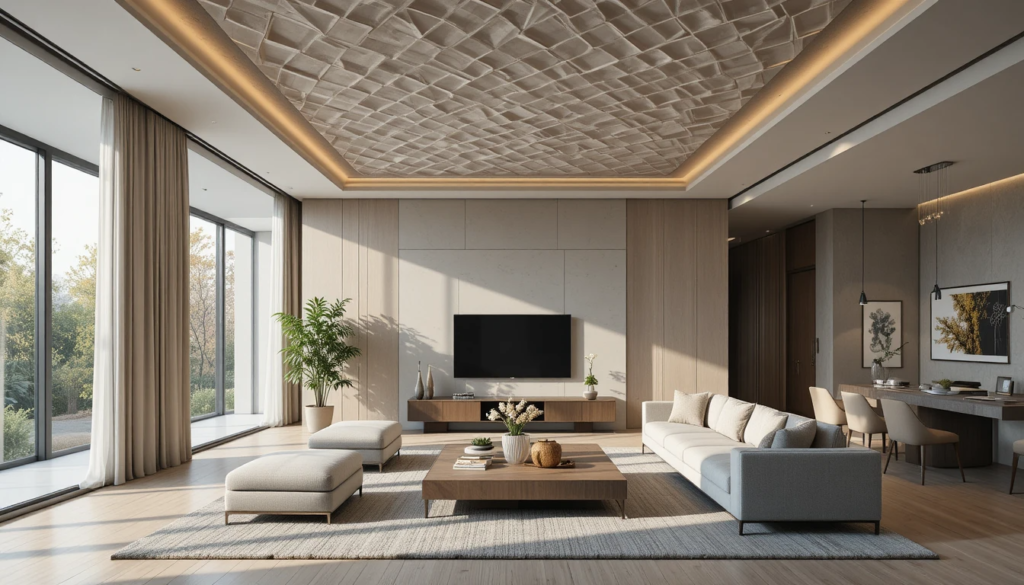
Ceiling texture improves room aesthetics and performance. Properly applied texture enhances light reflection, reduces echo, and hides small cracks or blemishes. It also simplifies repainting and protects against minor moisture damage. Durable textures withstand daily wear, making them ideal for high-traffic areas. Rooms with textured ceilings appear more finished and appealing.
Material Selection
Materials for texture include joint compound, plaster, acrylic coatings, and spray-on polymers. Joint compounds cost $15–$25 per 5-gallon bucket and are easy to work with. Plaster is more durable but labor-intensive and costs $30–$50 per batch. Acrylic sprays resist moisture, making them last longer in bathrooms or kitchens. Material choice affects shelf life, storage requirements, ease of application, and texture longevity.
Manufacturing and Preparation
Manufacturing ceiling texture materials involves mixing base powders with water or acrylic resins to achieve consistent viscosity. Proper mixing avoids clumps and ensures smooth application. Spray-on materials require air compressors or hopper guns, while trowel-applied compounds need precise spreading. Consistent preparation reduces waste, improves adhesion, and provides a uniform finish.
Tools and Equipment
Essential tools include trowels, wide putty knives, spray hoppers, scaffolding, ladders, brushes, and rollers. Optional tools such as drywall sanders, extension poles, and dust-extraction vacuums improve speed and reduce effort. Proper equipment ensures uniform coverage, prevents ceiling damage, and supports efficient cleanup. Choosing the right combination of tools reduces labor strain.
Application

- When applying ceiling texture, work in sections and use the appropriate technique for each section.
- Popcorn ceilings require spraying machines; knockdown needs to be flattened with trowels; and orange peel uses compressed-air spraying.
- Proper wetting, layering, and drying between coats prevents cracks.
- Controlled application reduces material waste and ensures a long-lasting, attractive finish that enhances light reflection and room ambiance.
Costs and Budgeting
Texture costs vary by material, labor, and complexity. Popcorn ceilings cost $1–$3 per sq. ft., knockdown $2–$4, and smooth finishes $3–$5. Hiring skilled contractors adds $50–$100 per hour, while DIY saves labor but requires purchasing tools and protective gear. Budgeting also accounts for scaffolding, protective sheeting, and primer. Proper cost planning avoids overspending while maintaining quality results.
Storage and Shelf Life
Material storage affects texture quality and workability. Joint compound and plaster require dry, cool conditions to prevent hardening, with a typical shelf life of 6 months to 1 year. Acrylic sprays can last longer. Proper storage preserves material consistency, reduces waste, and ensures smooth application. Bulk storage is ideal for multiple rooms or large properties to maintain a continuous workflow.
Different Rooms

- Different rooms require tailored textures. Bathrooms and kitchens benefit from moisture-resistant acrylic finishes.
- Living rooms favor knockdown or orange peel textures for elegance.
- Bedrooms often use smooth or subtle textures for modern appeal.
- Selecting the correct ceiling texture for each space ensures durability, ease of cleaning, and visual appeal while maintaining practical benefits in everyday use.
Thickness and Length Considerations
Ceiling texture thickness varies from 1/16 to 1/8 inch for light textures and 1/4 inch for heavy finishes. Ceiling length affects material quantity and scaffolding requirements. Accurate measurement reduces waste, prevents uneven application, and ensures cost efficiency. Calculating precise material needs helps maintain consistent aesthetics across rooms, reducing rework.
Quality Control and Finishing
After application, quality control ensures even texture, no gouges, and proper drying. Inspect ceilings under natural and artificial light for uniformity—sand minor imperfections before priming or painting. Correct finishing enhances aesthetics, durability, and resale appeal. Reliable quality checks reduce repair costs and improve homeowner satisfaction by ensuring the texture meets professional standards.
Decorative and Functional Options

Textures can include decorative stencils, patterns, or acoustic enhancements. Functional textures absorb sound, improve insulation, and hide imperfections. Decorative options elevate room aesthetics, while functional applications increase comfort. Selecting multi-purpose texture enhances value and usability, providing both visual appeal and practical benefits for daily living areas, bedrooms, or commercial properties.
Conclusion
Ceiling texture enhances both visual appeal and functional comfort across various rooms. From popcorn to smooth finishes, proper material selection, application techniques, and maintenance ensure durability, easy cleaning, and light optimization. Cost planning, storage, and quality control further support efficiency and long-term performance.
By integrating decorative and functional options, ceiling texture not only elevates room aesthetics but also improves acoustics and insulation. Consistent use of verified methods creates lasting value, practical benefits, and a polished, professional look in everyday living spaces.
Want to know about Removing Popcorn Ceilings: Expert Techniques for Modern, Smooth, and Safe Home Interiors Check out our Roof Repair category.
FAQs
Where the ceiling meets the wall, trim is the other way to finish that line. Our guide to crown molding installation covers the compound miter angles, coping and costs.
Ceilings can feature popcorn, knockdown, orange peel, slap brush, or smooth finishes. Each offers unique aesthetics, light reflection, and maintenance requirements, making it suitable for different room styles.
Costs depend on material, labor, and technique. Popcorn ceilings are around $1–$3 per sq. ft., knockdown $2–$4, and smooth finishes $3–$5, with contractor rates varying $50–$100 per hour.
Living rooms, bedrooms, kitchens, and bathrooms all benefit differently. Moisture-resistant finishes suit kitchens and bathrooms, while subtle textures enhance bedrooms, and elegant finishes improve living room ambiance.
Store compounds and plasters in cool, dry areas to prevent hardening. Acrylic sprays last longer, and proper storage preserves texture quality and consistency, reducing waste during application.